
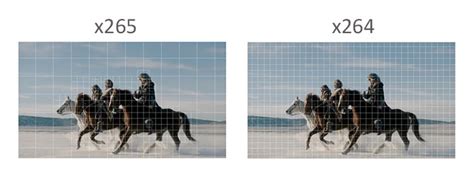
In the world of digital video, X264 X 265 stands at the core of modern encoding decisions. This guide explains how X264 X 265 balance quality and efficiency, offering practical guidance for creators, editors, and streaming engineers. By understanding how these two widely used encoders interact, you can tailor settings to your project and audience.
From fast delivery to archival-grade quality, the choices you make with X264 X 265 affect compatibility, file size, and playback smoothness across devices. This article breaks down the essentials and provides actionable recommendations you can apply today.
X264 X 265: The Core Idea
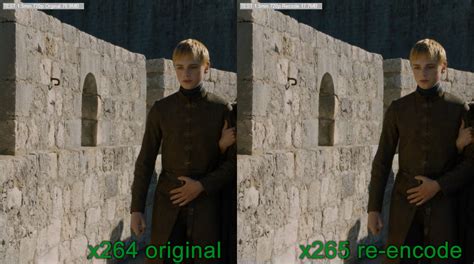
X264 X 265 pairs two approaches to compression: X264 for H.264/AVC with broad device support and X265 for HEVC with improved compression efficiency. In practical terms, you’ll often pick X264 when compatibility is non-negotiable, and X265 when you need to reduce bitrate at the same quality level for modern displays.
Key Points
- Choosing between X264 X 265 depends on target devices and bandwidth availabilities, not just theoretical quality.
- CRF and bitrate modes impact both file size and visual quality; test to find your sweet spot for each encoder.
- Hardware acceleration on modern GPUs can dramatically speed up X265 encoding at the cost of some precision in rate-control.
- Content type matters: fast-action sequences benefit from lower CRF values or faster presets with X264, while static scenes compress more efficiently with X265.
- Always verify playback on representative devices and networks to ensure your final file meets user expectations.
Understanding X264 X 265: The Basics
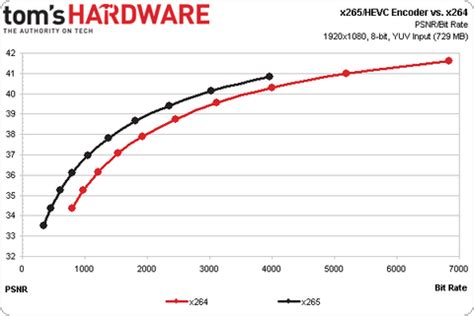
At its heart, X264 is the encoder for H.264/AVC, a standard with near-universal compatibility. X265 targets HEVC (H.265), which delivers more efficient compression, especially at higher resolutions. The practical impact is simple: for the same visual quality, X265 can often achieve a smaller file size, while X264 may yield broader compatibility across legacy devices and platforms.
Quality and Efficiency: How They Translate to Your Pipeline
In real-world workflows, you’ll balance two axes: image quality and bitrate. X265 tends to outperform X264 in terms of compression efficiency, particularly at 1080p and above, but it demands more CPU/GPU power and may introduce longer encode times. If your distribution target includes older devices or limited decoding capability, X264 remains a reliable choice. Your pipeline—whether streaming, archival storage, or on-demand serving—will determine which encoder provides the best trade-off.
Practical Encoding Settings
Presets, CRF values, and bitrate strategies shape the final product. For X264, slower presets generally yield better quality per bit, while for X265, mid-to-slow presets strike a balance between speed and efficiency. The exact numbers vary with content, but here are solid starting points:
Presets influence encoding speed and quality. For X264, try between slow and slower for a quality boost without an extreme time cost. For X265, medium to slow often delivers the best efficiency at reasonable encode times.
CRF and Bitrate modes shape file size and detail. A typical starting point is CRF 18–22 for X264 and CRF 20–28 for X265. If you’re streaming, prioritize a target bitrate with X265 when the audience bandwidth is constrained; if you’re archiving or delivering high-quality files, push CRF a bit lower for extra detail.
Best Practices by Use Case
Different projects demand different approaches. For broadcast or broad-device streaming, prioritize compatibility and stable playback by leaning toward X264 with moderate CRF and conservative bitrate targets. For high-efficiency delivery on modern devices, leverage X265 with careful rate-control and hardware-accelerated encoding when available. Always validate with real-world playback tests on target devices and networks.
What is the main difference in quality and file size between X264 and X265?
+X265 generally delivers stronger compression than X264, meaning you can achieve similar visual quality at a smaller file size with HEVC. However, the trade-off is higher CPU/GPU demand and potential compatibility considerations on older devices. In practice, you’ll gain efficiency on modern hardware, while keeping an eye on playback support across your audience.
When should I choose X264 over X265?
+Choose X264 when universal compatibility and broad device support are paramount, or when encoding resources are limited. If your target audience includes older devices, or if you require rapid decoding on a wide range of platforms, X264 is often the safer choice. If hardware acceleration is available and your goal is higher compression at similar visual quality, X265 becomes more attractive.
What CRF values are recommended for X264 X 265?
+A typical starting point is CRF 18–22 for X264 and CRF 20–28 for X265. Lower values increase quality and file size; higher values save space but may introduce noticeable artifacts. Always test with your actual content to find the best balance for your delivery goals.
How can I test encoding settings quickly?
+Pick a representative short clip that covers the range of motion, color, and lighting in your project. Encode the clip with a few parameter variants (e.g., X264 with CRF 20, X265 with CRF 24, different presets) and compare visual quality and bitrate. Use the same container and container settings to ensure a fair comparison, and automate playback checks on a shortlist of target devices.
Do presets affect both speed and quality for X264 X 265 equally?
+Presets influence speed and efficiency for both encoders, but the impact is codec-specific. Slower presets usually yield better compression efficiency (quality per bit) but require more processing time. In practice, you’ll typically trade a bit of speed for a noticeable gain in quality or compression, depending on the content and target bitrate.